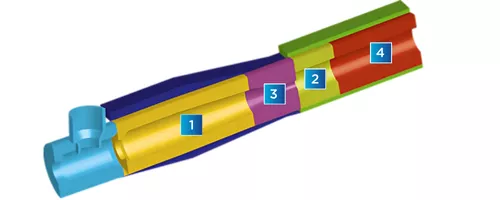

Saint-Gobain Performance Ceramics & Refractories is a global leader in refractory solutions, specializing in technologies for carbon black production. Carbon black tread reactors are specialized vessels used in the industrial production of carbon black, which is a key material in tire manufacturing.
These reactors operate under extreme conditions, requiring advanced refractory solutions designed to withstand high temperatures, erosive environments, and rapid temperature changes. The commissioning process for these reactors starts with the furnace operator specifying the operating conditions necessary to produce the desired grade of carbon black.
Factors such as reactor technology, operating temperatures, geometries, fuel sources, and feedstocks are all critical in determining the optimal refractory solution.